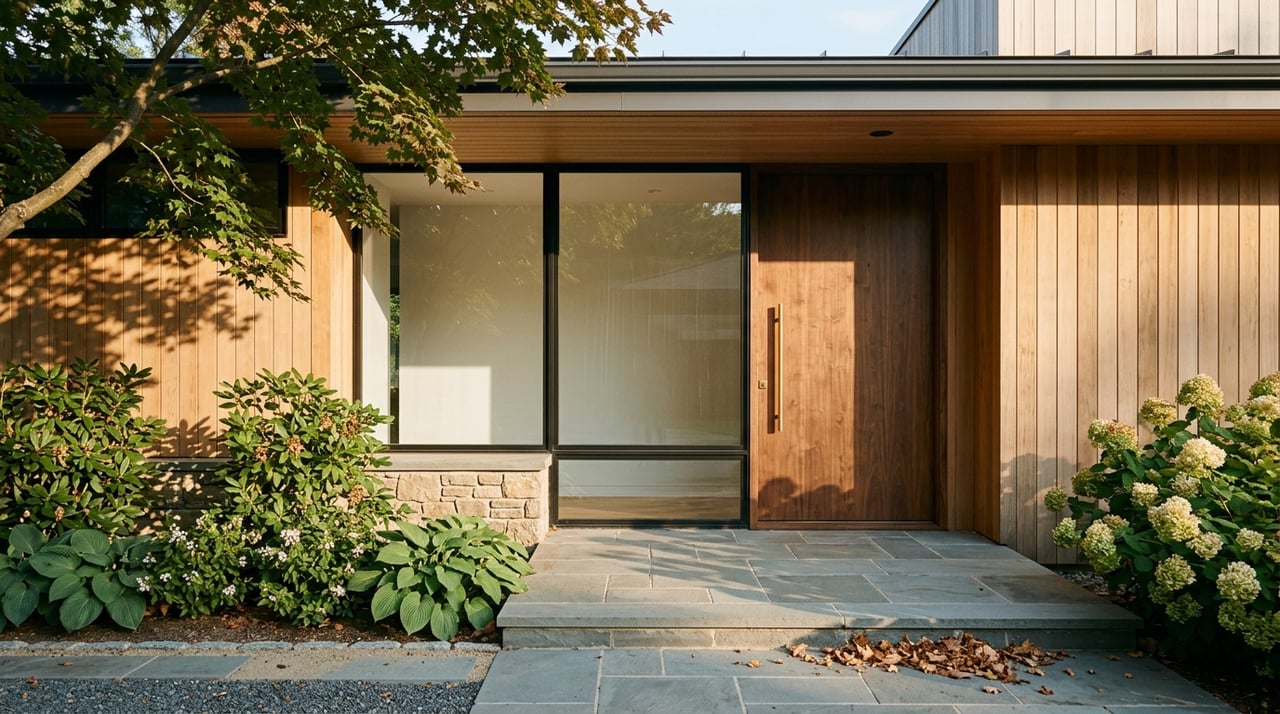
Looking at homes in Lincoln, MA and wondering why one property feels like a simple early New England farmhouse while another feels like a glass-wrapped modern retreat in the woods? That contrast is part of what makes Lincoln so distinctive. If you are buying or selling here, it helps to understand how the town’s architecture grew alongside its farms, estates, conservation land, and scenic roads. Let’s dive in.
Lincoln’s Architecture Starts With the Land
Lincoln’s housing story is closely tied to its landscape. The town began as a colonial farming community, stayed largely agricultural through the 19th century, then added country estates and, later, an unusually strong collection of modern homes.
Today, architecture in Lincoln is still shaped by wooded settings, protected open space, and scenic roads. Nearly 35 percent of the town, or about 5 square miles, is protected by permanent conservation deed or restriction, and the town has more than 80 miles of trails. That means the setting often matters just as much as the house style itself.
For you as a buyer, this can change how a home lives day to day. For you as a seller, it can shape how your property should be presented and marketed. In Lincoln, buyers are often responding to the full experience of house, lot, road character, and landscape together.
Colonial Farmhouses and Early Homes
Lincoln’s earliest homes reflect its agricultural roots. The town developed around an 18th-century meetinghouse and a colonial economy centered on farming, grazing, orchards, and sawmills.
A useful local example is the Samuel Hartwell House, described by the National Park Service as a typical New England farmhouse with two rooms per floor and a central chimney. That kind of home helps explain what many early Lincoln houses were designed to do: serve practical daily life rather than make a formal architectural statement.
What These Homes Often Feel Like
If you tour one of Lincoln’s older farmhouse-style homes, you may notice a compact footprint and a more segmented layout. These homes generally feel more compartmentalized than later open-plan houses.
You will also often see simple massing, wood-frame construction, and a restrained appearance. The appeal is usually in the character, age, and connection to Lincoln’s early history rather than in grand scale or ornate detailing.
What Buyers Should Notice
When you are evaluating this style, pay attention to:
- Room flow and ceiling heights
- Original details versus later renovations
- How the house sits on the land
- Whether the home is in a historic district or part of an inventoried area
In Lincoln, even a modest early house can feel special because of its setting. A farmhouse on a scenic road or near protected land may offer a very different experience than a similar-aged home elsewhere.
Colonial Revival and Georgian Revival Estates
By the late 19th and early 20th centuries, Lincoln began attracting Boston-area residents who wanted country houses in a rural setting. That shift brought more formal estate architecture to town, including Colonial Revival and Georgian Revival homes.
The Pierce House, built in 1900, is a local example of Georgian Revival architecture. Historic records also note other prominent Lincoln country houses from this period, including Tudor-style estates and castle-like remodels.
Hallmarks of the Style
Colonial Revival architecture typically features symmetrical facades, classical entry details, columns or pilasters, and fanlights or sidelights. Compared with earlier colonial farmhouses, these homes usually feel larger, more formal, and more structured in how they present themselves.
In Lincoln, this style often comes with an estate-like relationship to the land. The Pierce House originally included vegetable gardens, an orchard, and a carriage house, which shows how these properties were often designed as complete residential landscapes rather than just standalone homes.
Why These Homes Stand Out
For buyers, these houses often deliver:
- A formal front elevation
- Decorative entry architecture
- Larger lots or estate parcels
- Outbuildings or landscape features tied to the property’s history
Even when the square footage is not massive by today’s standards, these homes can feel ceremonial and composed. That can be a major draw if you love classic New England architecture with a more polished presence.
Mid-Century Modern Is a Lincoln Signature
One of the most interesting things about Lincoln is how important it is to modern residential design. Historic New England reports that the town has more than 300 modern-movement homes, and the 2023 town report counted 42 Modern houses within Lincoln’s historic districts.
That is not a small side note. In Lincoln, modern architecture is a major part of the town’s identity.
Why Modern Homes Matter Here
After World War II, Brown’s Wood was developed as a non-profit cooperative for young couples seeking affordable modern architecture. Preservation documents describe it as a wooded neighborhood of contemporary residences on large lots, with houses placed to fit the landscape rather than dominate it.
That design philosophy shows up across Lincoln’s modern housing. These homes were often planned to work with the woods, topography, and privacy of the site instead of creating a traditional suburban streetscape.
Features You May See
Lincoln’s modern and early modern homes often include:
- Long, low rooflines
- Large windows
- Natural materials
- Strong indoor-outdoor connection
- Siting that emphasizes privacy and woods
The Gropius House is a well-known local example of modern design that blends New England materials with industrial ones such as glass block, acoustical plaster, and chrome. More broadly, modern architecture in Lincoln often feels horizontal, light-filled, and deeply connected to the natural setting.
Not All Modern Homes Are the Same
If you are shopping for a modern home in Lincoln, it helps to know the category is broad. Preservation materials note everything from landmark architecture to more modest design-firm and prefabricated homes, including Deck House and Acorn homes.
That range can be a real advantage. You may find a high-design architectural property, or you may find a more approachable modern home with similar ideas about light, privacy, and relationship to the land.
Contemporary Homes and Remodels
Lincoln’s later housing often reads as contemporary, but not in one standard style. In practice, this category may include custom-built homes, later modern houses, and older homes that have been substantially expanded or renovated.
The town’s 1955 two-acre minimum building lot size helped shape later development patterns. As a result, many newer or expanded homes are defined as much by lot size, siting, and privacy as by any single architectural label.
What This Means for Buyers
Two homes built in the same decade can feel completely different in Lincoln. One may sit quietly on a wooded lot along a scenic road, while another may occupy a former estate parcel with a very different sense of scale and presence.
If you are comparing homes here, look beyond the year built. Pay attention to how the house interacts with the site, how much of the setting is protected or visible, and whether the architecture feels intentional in that landscape.
Historic Districts and Preservation Review
Lincoln’s preservation framework is an important part of the ownership experience. The Historical Commission inventories significant structures and neighborhoods, while the Historic District Commission reviews exterior changes visible from a public way and demolitions within historic districts.
The 2023 town report noted 109 properties in Lincoln’s historic districts, including 42 Modern houses. That detail is especially important because it shows that preservation review in Lincoln is not limited to early colonial homes or traditional estate properties.
Why This Matters Before You Buy or Sell
If a home is in a historic district, visible exterior changes go through the Historic District Commission. Outside the districts, the Historical Commission handles demolition-delay review and maintains inventories of significant structures and neighborhoods.
For buyers, this means it is smart to understand review requirements early if you are considering exterior updates. For sellers, it means architectural story and preservation context can be part of the property’s value and marketing strategy.
What Makes Lincoln Different From Nearby Towns
Many towns in Greater Boston offer historic homes. Many also offer newer construction. Lincoln stands out because its architecture spans colonial farmhouses, formal revival-era estates, and a remarkable concentration of mid-century modern design, all within a landscape shaped by conservation land and scenic roads.
That combination gives the town a layered identity. You are not just choosing between old and new. You are often choosing between very different ways of living in and with the landscape.
How to Evaluate Lincoln Architecture as a Buyer
If you are searching in Lincoln, it helps to approach architecture with both taste and practicality in mind. Style matters, but so do setting, review considerations, and long-term fit.
A few smart questions to ask are:
- Does the house layout match how you live now?
- Is the lot experience open, wooded, formal, or tucked away?
- Is the property in a historic district?
- Are you drawn to character, formality, modern light, or privacy?
- Is the home’s value tied more to the architecture, the land, or both?
In Lincoln, those answers can shape your experience far more than square footage alone.
How Sellers Can Position Architectural Style
If you are selling a home in Lincoln, your home’s style should not be treated as a simple label. Buyers here often respond to nuance, especially when architecture and setting work together.
A colonial farmhouse may appeal because of its history and simplicity. A Georgian Revival home may stand out for its symmetry and estate feel. A mid-century modern home may draw buyers who value glass, woods, and design pedigree. The right positioning highlights not just what the home is, but why it fits Lincoln so well.
That is where thoughtful storytelling, strong photography, and a tailored marketing plan can make a real difference. In a town with this much architectural variety, the details matter.
If you are thinking about buying or selling in Lincoln, working with an agent who can translate architectural character into smart strategy can help you make more confident decisions. Ashley Fuller brings a warm, informed approach to MetroWest real estate, with the neighborhood perspective and tailored guidance that distinctive homes deserve.
FAQs
What architectural styles are common in Lincoln, MA homes?
- Lincoln homes commonly include colonial-era farmhouses, Colonial Revival and Georgian Revival houses, mid-century modern homes, and later contemporary houses or remodels.
Why are mid-century modern homes important in Lincoln, MA?
- Lincoln has an unusually large concentration of modern residential architecture, with more than 300 modern-movement homes noted by Historic New England, making modern design a key part of the town’s identity.
What should buyers know about historic districts in Lincoln, MA?
- If a property is in a historic district, visible exterior changes are reviewed by the Historic District Commission, and that can affect renovation planning.
How does the landscape affect Lincoln, MA home styles?
- Lincoln’s protected open space, scenic roads, wooded lots, and large parcels shape how homes are sited and experienced, so the setting is often as important as the architecture.
Are older farmhouses and modern homes both found in Lincoln, MA?
- Yes. Lincoln’s housing stock spans early New England farmhouses, revival-era estates, significant mid-century modern homes, and later contemporary properties.