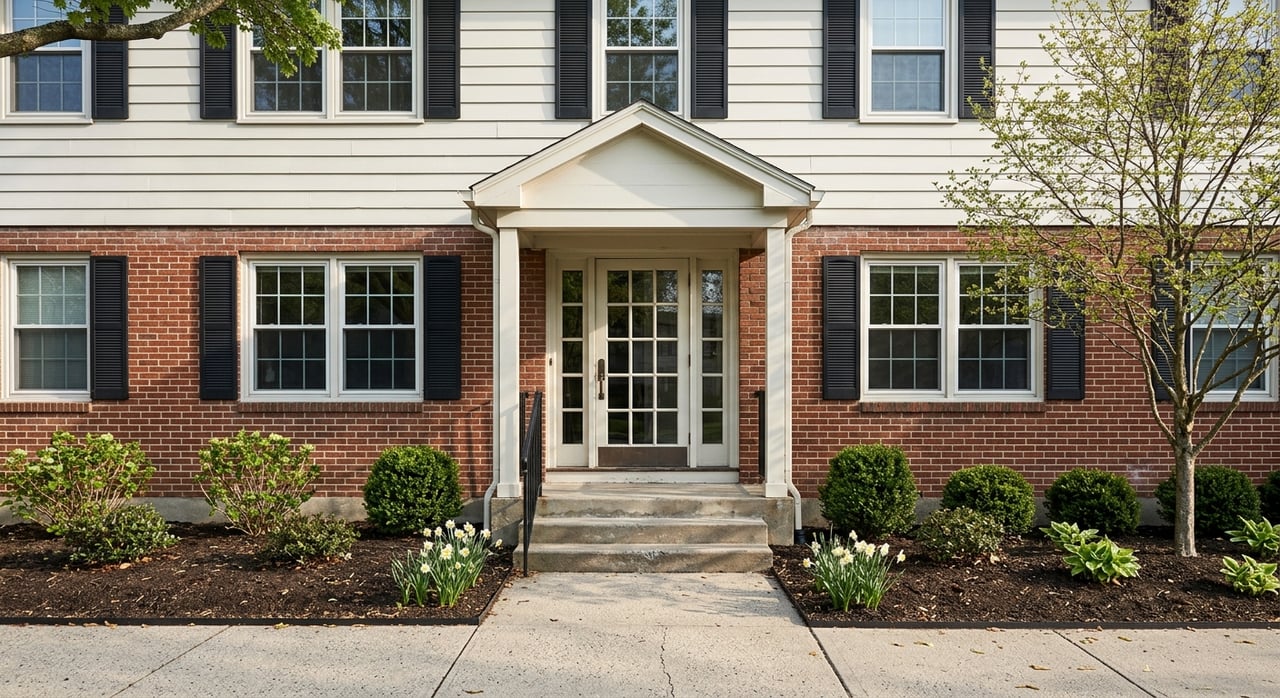
Buying your first place in Waltham can feel like a balancing act. You want a home that gets you into the market, fits your monthly budget, and still works for your day-to-day life. The good news is that condos are often the most realistic entry point here, and with the right questions, you can shop with more confidence. Let’s dive in.
Why Waltham condos draw first-time buyers
Waltham offers a real path into homeownership in a market that is still firmly on the expensive side of Greater Boston. Recent market data shows condos for sale in Waltham at a median listing price of $649,000, while the broader Waltham housing market has a median sale price of $838,000.
That gap matters if you are trying to buy your first home without stretching too far. It does not make Waltham inexpensive, but it does make condos one of the more practical ways to enter the local market.
Waltham also appeals to buyers who want a city with established housing, commuter convenience, and a range of condo styles. Current listings often highlight access to Moody Street and commuter rail options, which can be a strong fit if convenience is high on your list.
What the Waltham condo market looks like
Waltham has 65,849 residents, 25,498 households, and a homeownership rate just under 50%. The city also has an older housing stock, with about one-third of housing units built before 1940.
For you as a buyer, that often means starter condos here are not always shiny new developments. Instead, you are more likely to see older conversions, mid-century units, and late-20th-century condo buildings.
That mix can be a plus if you want more character or a layout that feels different from a typical large-scale complex. At the same time, older buildings call for more careful review of maintenance, systems, and association finances.
What starter condos usually look like
Recent Waltham condo inventory shows a pretty practical range for first-time buyers. Listings include older one-bedroom units around 777 square feet, two-bedroom condos around 1,214 square feet, and even some larger conversions with three bedrooms.
A useful starter-condo range in Waltham appears to be about 800 to 1,250 square feet. In that range, you may find anything from a smaller walk-up to a more spacious unit in a later-built complex.
You will also see wide variation in building age. Current examples include buildings from 1915, 1920, 1960, and 1989, which is a reminder that two condos with similar list prices can come with very different maintenance needs and ownership costs.
Why the monthly payment is more than the mortgage
One of the biggest first-time buyer mistakes is focusing too much on the list price. With condos, your real monthly cost usually includes much more than principal and interest.
For a more accurate budget, you need to account for:
- Principal and interest
- Property taxes
- Homeowners insurance
- Mortgage insurance, if applicable
- Flood insurance, if needed
- HOA or condo fees
- Utilities
- Ongoing maintenance
This is especially important in Waltham, where condo fees vary a lot. Recent examples range from $146 per month to $573 per month, with other listings in the $382 to $430 range.
That is a major difference in monthly carrying cost. A condo with a lower sale price but a much higher fee may not actually be the better deal for your budget.
What condo fees may include
The monthly fee number only tells part of the story. In Waltham, some associations include heat and hot water, while others may include water and sewer, insurance, snow removal, trash, storage, or even pool access.
That means two buildings with similar fees may offer very different value. Before you make a decision, you want to know exactly what the fee covers and what expenses you will still pay separately.
A higher fee is not automatically bad if it offsets other monthly costs or supports strong building maintenance. A lower fee is not automatically better if the association is underfunded or major repairs are being delayed.
Why reserves and assessments matter
If you are buying into a condo association, you are also buying into that association’s financial health. In Massachusetts, condo governance is shaped by the master deed, deed, bylaws, and Chapter 183A, and the state specifically points buyers toward reserve funds, budgets, and special assessments as key parts of due diligence.
Reserve funds matter because they help cover future shared repairs and replacements. If reserves are weak, owners may face special assessments when large expenses come up.
In practical terms, that could mean extra costs after closing for things like roofing, exterior work, or system upgrades. For a first-time buyer, this is one of the most important areas to understand before you commit.
What to ask at a showing
A condo showing is not just about the kitchen, the light, or the layout. It is also your chance to start gathering information about how the building is run and what ownership will really feel like.
Here are smart questions to ask:
- What does the condo fee cover?
- How strong are the reserve funds?
- Are there any current or planned special assessments?
- Are there pet rules or rental caps?
- Is parking deeded, assigned, or shared?
- Is storage included?
- Is laundry in-unit, shared, or exclusive to the unit?
- What does the master insurance policy cover?
- Will you need an HO-6 policy for the unit interior?
These questions can help you compare properties more clearly. They can also reveal red flags that are not obvious from listing photos alone.
What to review before you buy
In Massachusetts, condo due diligence goes beyond the unit itself. Buyers should review the master deed, bylaws, rules and regulations, budget, special assessments, reserve information, meeting minutes, pending litigation, and insurance documents.
Because condo ownership rights and obligations are tied to these documents, the state advises that legal questions should be handled with a real estate attorney. That step is especially important if anything in the documents feels unclear or restrictive.
This review can tell you a lot about the day-to-day operation of the association. It may also show whether the building has been proactive or reactive when it comes to maintenance and budgeting.
Older buildings need closer inspection
Because Waltham has a large share of older housing, inspections matter even more. Older condo buildings can be great opportunities, but they often require a closer look at shared systems and deferred maintenance.
Pay special attention to:
- Roof age
- Window condition
- Plumbing
- Heating and cooling systems
- Shared mechanical systems
- Signs of moisture or water intrusion
- General upkeep in common areas
If the building is older, the goal is not to avoid it automatically. The goal is to understand its condition, how well it has been maintained, and whether the association has planned responsibly for future work.
How Waltham compares with nearby markets
If you are deciding where to focus your search, Waltham sits in an interesting middle position. Recent condo listing snapshots show a median of $649,000 in Waltham, compared with $860,000 in Cambridge, $849,000 in Newton, and $275,000 in Framingham.
That means Waltham is notably less expensive than Cambridge and Newton, but still much pricier than more budget-oriented options like Framingham. For many buyers, Waltham can feel like a middle-ground choice if you want access, amenities, and an established market without paying Cambridge-level prices.
Still, the higher cost means you need to run the full monthly numbers carefully. In this market, success often comes from buying the right condo, not just the cheapest one.
A smart first-time buyer strategy
If you are shopping for a starter condo in Waltham, a clear process can save you stress and money. The best approach is to combine budget discipline with strong property-level due diligence.
A practical game plan looks like this:
- Set a full monthly budget, not just a target price.
- Compare condo fees based on what they actually include.
- Ask detailed questions about reserves and assessments.
- Review condo documents carefully.
- Inspect older buildings with extra care.
- Compare each property based on total ownership cost and condition.
That kind of approach helps you avoid surprises after closing. It also gives you a better chance of buying a condo that supports your lifestyle and your long-term financial goals.
If you are entering the Waltham market for the first time, patience and preparation go a long way. A condo can be a smart first step, but the strongest decision usually comes from looking beyond the listing price and understanding the full picture.
When you are ready to talk through Waltham condos, monthly costs, and what to watch for in older buildings, Ashley Fuller offers thoughtful, hands-on guidance to help you move forward with clarity.
FAQs
What is the typical price range for starter condos in Waltham?
- Recent market data shows Waltham condos at a median listing price of $649,000, which makes them a lower-priced entry point than the broader local housing market.
What size condo should first-time buyers expect in Waltham?
- Many starter condos in Waltham appear to fall around 800 to 1,250 square feet, though smaller one-bedrooms and larger conversions are also available.
What should first-time buyers in Waltham know about condo fees?
- Condo fees in Waltham vary widely, with recent examples ranging from $146 to $573 per month, so you should always ask what is included before comparing properties.
What should buyers review in Massachusetts before buying a condo?
- Buyers should review the master deed, bylaws, rules and regulations, budget, reserve information, special assessments, meeting minutes, pending litigation, and insurance documents.
What issues matter most in older Waltham condo buildings?
- In older buildings, pay close attention to the roof, windows, plumbing, heating and cooling, shared systems, and any signs of moisture or deferred maintenance.
Is Waltham more affordable than Cambridge or Newton for condo buyers?
- Based on recent listing snapshots, Waltham condos are less expensive than condos in Cambridge and Newton, but they are still significantly more expensive than condos in Framingham.